

FIBER Plastic Credits &
FIBER Carbon Credits
The Framework for Income, Biodiversity, and Emission Reduction (FIBER) Program
On This Page
Unlocking Sustainability: The World’s First Jute Sector-Focused Carbon and Plastic Avoidance Credits Aligned with All Sustainable Development Goals (SDGs)
The Framework for Income, Biodiversity, and Emission Reduction (FIBER) Program is the first carbon and plastic avoidance crediting program for the Jute industry.
The FIBER Credit Program represents a globally recognized initiative focused on carbon sequestration and plastic avoidance through sustained jute cultivation. The FIBER Program is the jute sector-specific carbon and plastic avoidance crediting program worldwide. It facilitates financial investment in activities that support nature-based carbon sequestration, actively sustain renewable carbon sinks that protect ecosystems, transition to upstream plastic avoidance, and enhance livelihoods. The FIBER Program is a pivotal and dynamic component in the ongoing efforts to preserve our shared environment and economic well-being.
By combining scientific rigor with innovative strategies, the FIBER Program connects farmers, manufacturers, and stakeholders in both voluntary and compliance carbon markets. Utilizing advanced technologies like distributed ledger systems, it ensures transparent tracking of carbon and plastic credits, fostering trust and encouraging participation in climate action initiatives.
Areas of Focus
FIBER Carbon Credits
Boosting carbon emissions avoidance through Jute cultivation as an effective approach to sequestering carbon in a rapid and renewable, environment, FIBER provides Tokenized Carbon Sequestration Credits, blockchain-based digital tokens that represent verified units of carbon dioxide removal and storage from the atmosphere. Each token represents a specific quantity of 1 metric tonne CO₂ that has been permanently sequestered through jute cultivation, with credit ownership, transfer, and retirement managed via distributed ledger technology.
FIBER Plastic Credits
Upstream Tokenized Plastic Avoidance Credits are blockchain-based digital tokens that represent verified units of plastic production prevention at the source of the supply chain. Each token quantifies a specific amount of 1 tonne plastic whose manufacturing, processing, and distribution has been avoided through the implementation of alternative materials or solutions, with all transactions, ownership, and retirement managed through distributed ledger technology.
FIBER Bundled Environment Credits
Bundled Combination Tokenized Credits are blockchain-based digital tokens that represent verified environmental benefits across multiple impact categories within a single credit instrument. These tokens quantify and bundle complementary environmental outcomes — Carbon sequestration/avoidance and Plastic avoidance — creating composite credits that address multiple sustainability challenges simultaneously through unified measurement, verification, and trading mechanisms.
Standards
How it Works
Projects under the FIBER Program, whether concentrating on carbon sequestration or upstream plastic avoidance in the jute sector, must undergo a thorough assessment process. Once certified, these projects are eligible to receive FIBER Credits, with each credit representing one metric tonne of carbon dioxide sequestered or one metric tonne of upstream plastic avoided, or bundled together for composite environmental impact. Projects can then monetize these credits in the carbon and plastic markets to support their climate change mitigation initiatives.
Initiating a TJF Project: Key Factors to Keep In Mind
Are you interested in developing a project utilizing the FIBER Program? This section provides essential information to consider prior to commencement.
Preparatory Steps
Before initiating project development within the FIBER Program, it is important to familiarize oneself with the associated processes and requirements.
- Confirm that your project aligns with the guidelines stipulated in the FIBER Standard and Guidance. For the most current program documentation, please visit the FIBER Program Details – Requirements section.
- Assess the eligibility of your proposed project activities under the FIBER Program.
The principal steps involved in project development are as follows:
- Pipeline listing established through a draft project description document.
- Validation conducted by an empaneled third-party auditor, specifically a validation and verification body (VVB), which will sanction the final project description. Successful completion of this phase results in the project’s registration.
- Verification performed by the VVB in accordance with the project’s monitoring plan, which confirms the emissions sequestered and/or upstream plastic avoidance achieved by the project.
- Upon successful verification and endorsement by The Jute Foundation, the project proponent may submit a request for the issuance of credits.
For comprehensive guidance on this procedure and additional information (such as opening a registry account), please consult the Registration and Issuance Process document.
Project developers are responsible for selecting an appropriate methodology to quantify the project’s greenhouse gas (GHG) emissions and/or plastic avoidance. It is crucial that project developers refrain from directly contacting the VVBs to prevent potential conflicts of interest.
The Jute Foundation will appoint VVBs from its empaneled list to monitor, audit, and verify projects, charging the project proponent a fee for these services.
All projects will undergo a 15-day public comment period during the pipeline listing phase. Any comments received during this period must be addressed by the project developer.
Please be advised that TJF staff are unable to provide assistance in the actual development of a project. We can, however, respond to inquiries regarding our rules and requirements.
Fees and Finances
FIBER project development costs vary from project to project, outlined in following categories:
- The Jute Foundation fees as summarized below and outlined in detail the TJF Program Fee Schedule
- Auditing fees payable by TJF to the empaneled VVBs.
- Administrative charges incurred by TJF to manage the registration and issuance of tokenized credits.
- Issuance fees payable when the credits are qualified and issued to the project proponent
Project development fees include project development and operations, monitoring, and consultants’ fees which is independently managed by the project proponents. TJF, however, has automated the complete consultant process, including project development report, project listing, and data audits to reduce the burden of expenses on farmers and manufacturers. Project proponents are advised to review and understand this service before contracting consultants for the same to benefit from improved ROI.
Timelines
Project proponents must be aware of two critical timelines prior to commencing project development:
- Project registration, and
- Issuance of FIBER credits.
Timeline for Project Registration
- Upon submission of the draft project description by the project proponent, the project will undergo a 15-day public comment period.
- Following this period, the project will enter the validation phase, during which a validation/verification body (VVB) will evaluate the project description alongside the feedback received during the public comment period.
The duration of the validation process may vary depending on the specific project.
To expedite this process, TJF has invested in advanced technologies and implemented an automated data-verification layer, enabling validation of the majority of projects within 30 to 45 days.
After successful validation, the project proponent will proceed to request project registration with TJF in accordance with the procedures outlined in the Registration and Issuance Process document.
Timeline for FIBER Credits Issuance
Prior to the issuance of FIBER credits, several essential steps must be completed:
- Project activities must be implemented, and the carbon and/or plastic sequestration and avoidance must be monitored.
- The environmental impact achieved by the project must be verified by a TJF empaneled validation/verification body (VVB) and duly approved by TJF.
Upon successful verification, the project may then request the issuance of FIBER credits.
The specific timeline for this process varies by project. TJF has again leveraged advanced technologies and introduced an automated data-verification layer to ensure that most credits are issued within 30 to 45 days.
Next Steps
Upon successful registration of a project and issuance of FIBER Credits, the project proponent may sell these credits in the open market and in voluntary and compliance markets. When an entity utilizes FIBER Credits to offset a portion of its carbon or plastic footprint, these units will be “retired,” meaning they will be removed from circulation to ensure that they may be used for such purposes only once.
As a mission-driven, non-profit standard-setter and facilitator, TJF upholds stringent standards and auditing processes to qualify and quantify FIBER Credits. TJF’s commitment to environmental sustainability and the welfare of livelihoods is further exemplified by its ongoing support for jute farmers, operating a platform for trading credits on behalf of both farmers and manufacturers while complying with regulations governing non-profit organizations.
The Jute Foundation Champions Jute
The Jute Welfare Foundation is a regional plastic and natural resource recycling organization committed to sustainability, supporting farmers, and investing in eco-friendly alternatives for a plastic-free future.
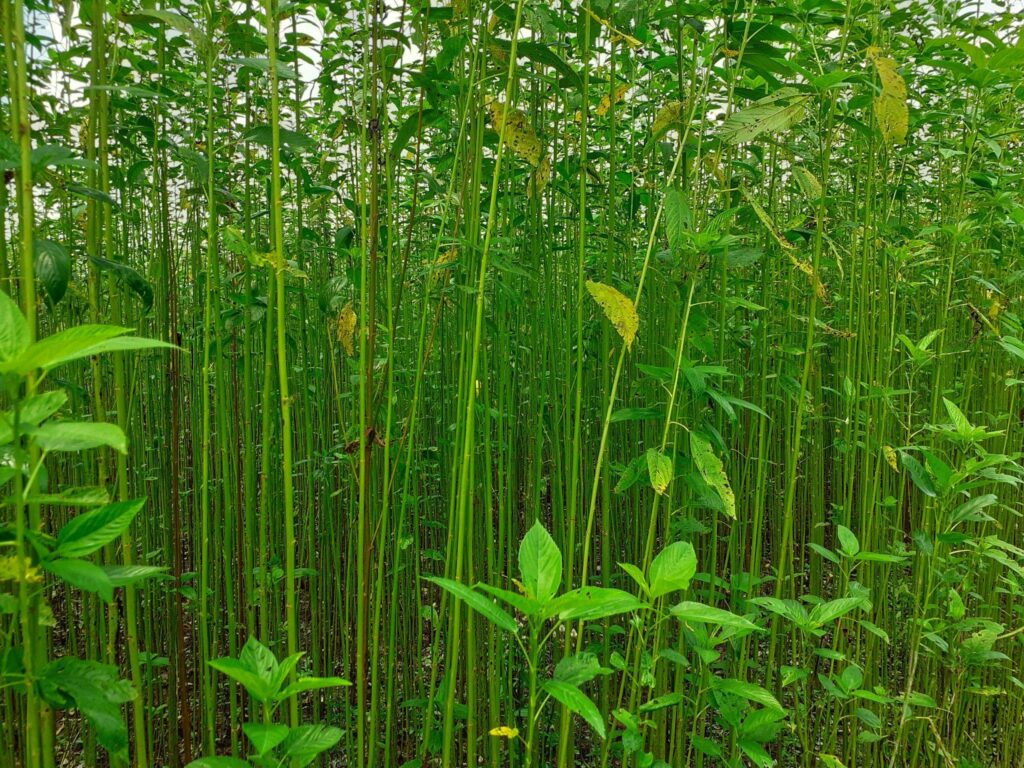
Report & Research
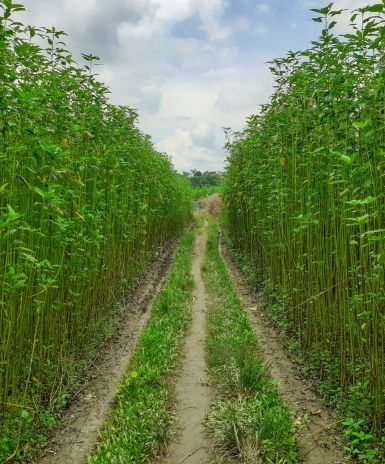
Mitigating Climate Change With Jute, A Natural Fiber.
An exploration of how jute shifts the sustainability
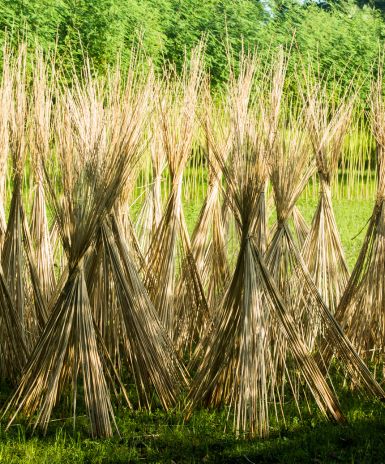
Net Ecosystem CO2 Exchange From Jute Crop & Its Drivers.
Maximising reducing plastic at source

Environmental Impact Assessment of Jute Bags - Tracing Impacts.
A clear, practical guide for businesses
Frequently Asked Questions
What is The Jute Foundation and what is its role?
The Jute Foundation, formerly The Jute Welfare Foundation, is India’s first dedicated not-for-profit Registry for developing Carbon and Plastic credits in the jute industry. We create and manage the infrastructure, including methodologies and standards, that allows jute farmers and manufacturers to generate, certify, and trade credits, providing a framework for project validation and registration.
What are FIBER Credits?
FIBER Credits are Tokenized Carbon Units (TCUs) and Tokenized Plastic Units (TPUs). These credits are built on a reliable blockchain infrastructure to ensure lifecycle traceability and guaranteed immutability.
What is the FIBER Program?
FIBER – The Framework for Income, Biodiversity, and Emission Reduction – is The Jute Foundation’s program for managing environmental credits from the jute value chain. It includes three methodologies: TJF0001 (Carbon), TJF0002 (Plastic Avoidance), and TJF0003 (Bundled Dual Credit), specifically designed for jute.
Is The Jute Foundation a government body?
The Jute Foundation is a Section 8 not-for-profit company registered under the Companies Act, 2013. All revenues generated are reinvested into the jute sector for farmer training, sustainable cultivation, methodology development, and community development.
How does The Jute Foundation differ from other carbon credit?
The Jute Foundation is a blockchain-based registry dedicated to jute. It offers three key advantages:
· fully digitized Registry operations improving speed, accuracy, and costs;
· tailored methodologies for jute’s cultivation and value chain; and
· a dual-credit system where FIBER credits support all 17 SDGs.
How can I stay updated on the FIBER Program, new methodologies, and registry developments?
Subscribe to The Jute Foundation’s newsletter and follow us on LinkedIn for updates on programs, methodologies, pilot reports, and policies. We post updates on our website when standards, fees, or registry rules change, and stakeholders in active projects receive direct notifications about relevant updates.
Who can I contact if I have questions about the FIBER Program or my project?
For full details, please visit our Contact page. For questions about methodology, project registration, or VVB engagement, feel free to reach out to us directly. Our team can clarify program rules, standards, the registration process, and provide automation support.