

The Golden Fibre Revival.
Pioneering High-Integrity
Environmental Credit Frameworks.
The Jute Foundation (TJF) is India’s premier not-for-profit Section 8 organization dedicated to modernizing the jute sector. Operating under our flagship FIBER program, we bridge scientific rigor, environmental governance, and market access to transform natural jute into a globally recognized climate solution.
Governed for Impact.
Engineered for Absolute Transparency.
The Jute Foundation (TJF) is India’s premier not-for-profit Section 8 organization dedicated
to modernizing the jute sector. Operating under our flagship FIBER program, we bridge
scientific rigor, environmental governance, and market access to transform natural jute
into a globally recognized climate solution.
The Institutional Blueprint
Unlike downstream waste management, TJF’s plastic avoidance methodology (TJF0002) stops non-degradable fossil-fuel polymers at the source. Substituting single-use polypropylene, HDPE, and LDPE with compostable jute eliminates long-term microplastic pollution across terrestrial soils, rivers, and oceans.
• Metric: 100% Not-for-Profit reinvestment into agricultural research, digital registry infrastructure, and payout protocols.
• Governance: Independent technical advisory board directing methodology validation, VVB audits, and global registry integrations.
• Beneficiary: Smallholder farming networks, processing workers, and global markets seeking verified green assets.
The Seed-to-Soil Advantage
Through our experience, we have observed that jute is a rapidly renewable biological power-house. During its short 120-day growth cycle, one hectare absorbs up to 15 tonnes of CO2, far outperforming standard forestry rates while enriching Soil Organic Carbon and restoring agricultural biodiversity seamlessly.
• Metric: Up to 15 Metric Tons of $\text{CO}_2$ sequestered per hectare per 120-day cycle.
• Governance: Methodologies backed by rigorous soil sampling baselines (Years 0, 5, and 15) and a mandatory 20% buffer pool allocation.
• Beneficiary: Local ecosystems, agricultural land preservation, and smallholder farmers building climate resilience.
The Land & Sea Preservation Engine
Our charter commits to establishing standardized, globally compatible methodologies for carbon sequestration and upstream plastic avoidance. Operating independently, TJF develops open-source frameworks aligned with benchmarks like ICVCM Core Carbon Principles and PCQI guidelines.
• Metric: 1 Metric Ton of virgin fossil-fuel plastic permanently avoided per unit of functional jute substitution.
• Governance: Audited supply chain tracking, functional equivalence formulas, and verified displacement factors across global trade modules.
• Beneficiary: Terrestrial habitats, marine ecosystems, and municipalities struggling with landfill overflow.
From Crop to Community.
Elevating Rural Incomes Through
Value Stacking.
The Jute Foundation (TJF) is India’s premier not-for-profit Section 8 organization dedicated
to modernizing the jute sector. Operating under our flagship FIBER program, we bridge
scientific rigor, environmental governance, and market access to transform natural jute
into a globally recognized climate solution.
Yield & Quality Optimization
We partner with agricultural extension units to deploy improved retting techniques, high-yield certified seed varieties, and soil health management tools to smallholder jute farmers.
Direct Performance Monetization
Digital ledger systems enable farming households to earn performance-based payouts from verified carbon removal (JCU) and plastic displacement (JPAC) credits.
Fair-Wage Industrial Processing
At the manufacturing level, revenue sharing incentivizes jute mills and processing units to maintain high environmental standards and fair-wage labor conditions.
SDG Value Stacking
Every verified action is mapped against the United Nations Sustainable Development Goals, multiplying societal returns and empowering women across the processing workforce.
Community Reinvestment
A fixed percentage of registry proceeds funds local infrastructure, clean water access, and educational programs across rural jute-growing hubs in Eastern India.
Transforming Ecosystems & Global Trade.
Beyond Corporate Compliance.
By formalizing the climate value of jute, The Jute Foundation offers global businesses
and national governments a defensible, audit-ready framework to achieve sustainability
objectives while driving socio-economic transformation.
01
Regulatory Compliance & Market Access
As global regulations tighten—including the EU Carbon Border Adjustment Mechanism (CBAM), India’s CCTS Phase 2, and the UN Global Plastics Treaty—our frameworks provide verified Scope 3 interventions and verifiable materials for international trade.
02
Upstream Ecosystem Restoration
By shifting demand from synthetic polymers to natural plant fibers, our methodologies preserve arable land, reduce fossil-fuel extraction footprints, and mitigate the 400-year landfill lifecycle of conventional plastics.
03
Fair-Wage Industrial Processing
Through immutable digital tracking and ISO-accredited Validation and Verification Body (VVB) audits, TJF eliminates double-counting risks and protects all participating entities from greenwashing vulnerabilities.
04
Inclusive Rural Economic Growth
Unlocking secondary income streams for over four million jute-farming families creates economic stability, mitigates seasonal distress, and fosters long-term rural community resilience.
Guided by Expertise.
The Leadership & Advisory Team.
The Jute Foundation is led by veteran public policy architects, climate negotiators, institutional builders, and agricultural scientists dedicated to modernizing India’s golden fibre ecosystem.
The Founding Leadership

The Founding Leadership
Former IAS officer and senior institutional reformer. Co-founded The Jute Foundation on World Environment Day 2018 in collaboration with UN Environment leadership. Former Director General of DGS&D and former Chairman of IJIRA, bringing decades of public policy, international trade, and jute sector governance expertise to the organization.
The Advisory & Technical Board

Shri C. K. Mishra
Shri C.K. Mishra is a former Indian Administrative Service (IAS) officer of the 1983 batch, who retired as Secretary, Government of India.

Shri Atul Bagai
Shri Atul Bagai is a senior international environmental professional and former Head of Country Office, India, United Nations Environment Programme (UNEP).
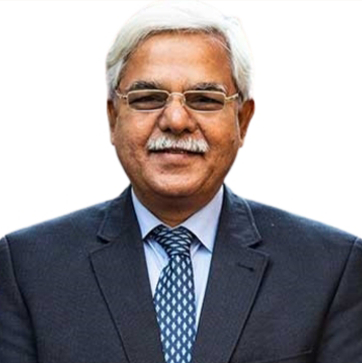
Shri Rajani Ranjan Rashmi
Shri R R Rashmi is a retired IAS officer and a leading climate policy expert. He is Special Secretary in the Ministry of Environment, Forest and Climate Change.
Join the Golden
Fibre Revolution.
Whether you are a farming cooperative seeking to verify your soil impact, a manufacturer adopting biodegradable alternatives, or a corporate organization seeking audit-ready ESG assets, The Jute Foundation provides the verified framework to make it happen.