

Establishing Verifiable High-Integrity Environmental Standards.
The Jute Foundation (TJF) is India’s premier Section 8 non-profit modernizing the jute sector. Through our FIBER Plastic and Carbon credits, we combine scientific rigor, governance, and market access to deliver comprehensive compliance across all 17 SDGs.
On This Page
Empowering Sustainable Development: Carbon Credits that Drive Positive Change Across All UN SDG Goals
The methodologies established within the FIBER Credit Program describe the precise procedures and requirements that FIBER projects must adhere to in order to qualify and quantify greenhouse gas (GHG) emission reductions, carbon dioxide removals, and the avoidance of upstream plastic utilization, for which tokenized FIBER Credits are issued.
Currently, the FIBER Program offers two methodologies focusing on carbon sequestration, plastic avoidance, and bundled environmental credits. Each methodology articulates specific conditions of applicability and outlines criteria for defining the project boundary, identifying the baseline scenario, assessing additionality, quantifying reductions and/or removals, and establishing requisite monitoring procedures.
As a fundamental element of the FIBER Program, all methodologies undergo public stakeholder consultation and a thorough review process, including evaluation by an independent group of experts. This rigorous process ensures technical accuracy, consistency, and adherence to program regulations.
Select Methodology
Each methodology—Carbon, Plastic, or Environment—specifically addresses the pertinent climate impacts, and the associated project activities must align with its objectives. Project developers can determine the appropriate methodology by ensuring compliance with the applicable conditions outlined in the methodology and adherence to all guidelines and standards set forth by the FIBER Program.
Quantify GHG Emissions
By adhering to the stipulations outlined in the chosen methodology, project developers will quantify the environmental impact of their initiatives. This includes measuring greenhouse gas (GHG) reductions, carbon dioxide removals, and upstream plastic avoidance resulting from their project activities.
Generate FIBER Credits
Upon the accurate assessment of a project’s climate impact, The Jute Foundation will authorize the issuance of FIBER Credits. This process includes recording the credits on a blockchain to ensure immutability and safeguard against fraud, duplicity, and double counting.
Tokenize the Credits
Following a thorough assessment, the FIBER Program will establish the provenance of the credits by detailing the entire lifecycle involved in generating FIBER Credits. This will guarantee transparency, traceability, and verifiability of the credits. The resulting tokenized FIBER Credits will embody the project’s climate benefits and will be ready for trading in both carbon and plastic markets.
Active Methodologies
The following FIBER Credit methodologies are currently active within the FIBER Program framework. Projects may use these methodologies when registering with The Jute Foundation’s FIBER Program, provided they adhere to all program guidelines and standards and their activities are deemed eligible under the FIBER Program. For detailed information on compliance, please consult the most recent version of the FIBER Program Standards in the Guidelines & Standards Section.
The Environmental Impacts of FIBER Credits
FIBER CREDITS SATISFY ALL 17 SDG GOALS
Increases income for farmers and stakeholders.
Enhanced incomes lead to additional revenue.
Natural soil fertilization and avoids microplastics.
Economic stability. Families afford education. Reduces child labor.
Empowers women in rural areas through employment and skill development.
Alternatives reduce water pollution. Promote purification solutions.
Provides biomass from jute sticks for green energy applications.
Supports sustainable livelihoods and additional income.
Invests in alternatives to plastics and improves agricultural infrastructure.
Increases farmer incomes through carbon credits and price adjustments.
Jute bags replace plastics, enhancing urban health and agricultural quality.
Encourages a shift from plastics to jute.
Ecological restoration. Carbon sequestration through jute cultivation.
Reduces marine pollution with biodegradable products.
Enhances soil health and reduces demand for petroleum-based products.

Supports resource stability and community empowerment.
Encourages collaboration for eco-friendly practices and rural livelihoods.
Add Your Heading Text Here
UPCOMING METHODOLOGIES
The Jute Foundation’s FIBER Program is committed to building the Framework for Income, Biodiversity, and Emission Reduction. Towards this, it is also spearheading the development of the following methodologies:
Comprehensive jute lifecycle credits
Carbon sequestration: naturally occurring, rapidly renewable, carbon sink
Sustainable farming & methane reduction credits
Plastic avoidance: the global first program focused on eliminating upstream plastic use through jute products and providing offset mechanism for plastic use
Social & livelihood credits
Bundled credits: a uniquely positioned comprehensive credit for discerning organizations seeking a holistic environment impact
FIBER Credits address all the 17 Sustainable Development Goals (SDGs) defined by the United Nations
Expanding Global Markets for Eco-Friendly Commerce
We open new doors for commercial enterprises by aggressively educating global consumers on the benefits of jute. By actively combating plastic usage, we stimulate international demand, helping businesses transition into highly profitable, green marketplaces.
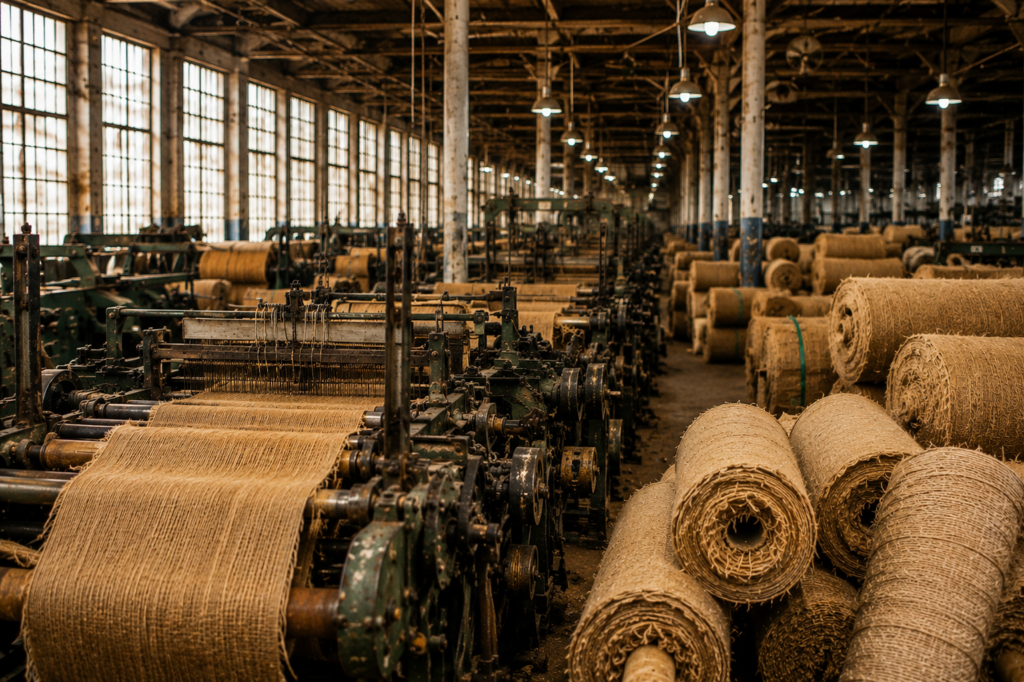
Report & Research
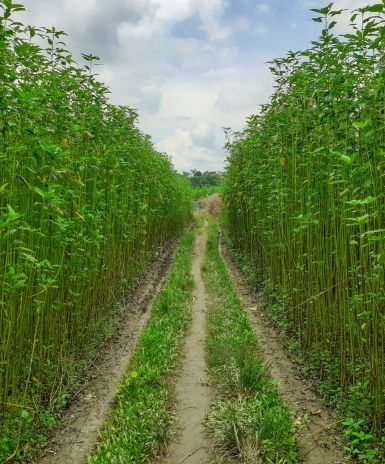
Mitigating Climate Change With Jute, A Natural Fiber.
An exploration of how jute shifts the sustainability
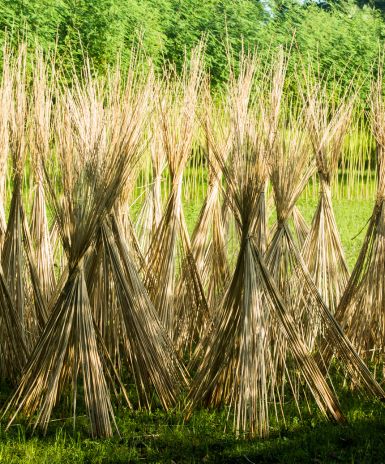
Net Ecosystem CO2 Exchange From Jute Crop & Its Drivers.
Maximising reducing plastic at source

Environmental Impact Assessment of Jute Bags - Tracing Impacts.
A clear, practical guide for businesses
Frequently Asked Questions
What are the TJF methodologies
The Jute Foundation currently offers three methodologies:
· TJF0001 Carbon sequestration: GHG accounting for jute cultivation, covering biomass and stem, compliant with ISO 14064-2; one TCU equals one tonne of CO₂e sequestered, net of upstream emissions.
· TJF0002 Plastic avoidance: LCA-based equivalence testing measuring petrochemical substitution for jute products; one TPU equals one tonne of displaced plastic packaging.
How did TJF develop the scientific methodology behind FIBER Credits and what is the evidence base?
The FIBER Credits methodology, developed with top academic institutions and validated by ICAR-CRIJAF’s field studies using eddy-covariance flux measurements, follows the CDM AR-ACM0001 framework and is designed for jute’s annual cultivation cycle.
How does the plastic avoidance methodology calculate how much plastic a jute product displaces?
TJF0002 uses a Life Cycle Assessment to quantify plastic displacement for different jute products. It considers load capacity, reuse cycles, and end-of-life features. The peer-reviewed displacement coefficients are: 1 tonne of jute sacking displaces 0.85–1.0 tonnes of woven polypropylene; 1 tonne of jute carry bags displaces 0.6–0.8 tonnes of LDPE/HDPE film; and 1 tonne of jute geo-textiles displaces 0.7–1.1 tonnes of polyester/polypropylene geo-textiles. These coefficients are reviewed periodically as data evolves.
Can a project apply more than one TJF methodology?
Projects can apply TJF0001 and TJF0002 separately, or use TJF0003, which combines both into a single methodology with a unified fibre-batch identity. When multiple methodologies are used, proponents must ensure GHG emission reductions and plastic displacement claims are distinct and not double-counted, which TJF0003 manages automatically. Manufacturers sourcing from various farmers may utilize TJF0003 to cover the entire supply chain from farm-gate to mill-gate.
How can a new methodology be proposed or an existing TJF methodology be revised?
The Jute Foundation invites proposals from researchers, industry stakeholders, and institutions to improve existing methodologies (TJF0001, TJF0002, TJF0003) and develop new methodologies related to Jute. Developers should first submit a concept note for review; upon approval, they can develop the full methodology. This will then go through a 15-day public comment period and an independent assessment by an accredited VVB before formal adoption. Guidelines are available in the JWF Methodology Approval Process document on the website.
What am I buying?
What exactly is a FIBER credit?
A FIBER credit is a verified, independently audited environmental credit from the jute value chain, issued under methodology TJF-METH-2026-001. There are two families: jute SOC credits (durable soil organic carbon enhancement and verified emission reductions from jute cultivation) and jute plastic-avoidance credits (plastic avoided at source when jute substitutes for HDPE, LDPE or polypropylene). Each credit represents one verified tonne and carries a unique serial number.
Are these carbon credits or plastic credits?
Both families are available. SOC credits support climate and sequestration claims; plastic-avoidance credits support plastic-reduction and circular-economy claims. You can purchase either or both, depending on your sustainability targets.
What makes FIBER credits different from generic offsets?
Three things: (1) they are end-to-end traceable — every credit carries a Digital Green Passport linking it to a specific farm, practice and verification; (2) they are independently verified by accredited third-party auditors; and (3) they are backed by a 20% buffer pool that protects you against any reversal. You are buying verified, traceable impact — not an unverifiable assertion.
Quality & Integrity
How do I know the credits are real and additional?
Every project must pass three additionality tests — regulatory surplus, common practice, and investment analysis — documented at project level. The benefit is quantified conservatively (temporary biomass is excluded from SOC), and each project is audited by an independent Validation and Verification Body (VVB) accredited to ISO/IEC 17029 and ISO 14065.
Who verifies the credits?
Independent, third-party VVBs accredited by NABCB (India’s National Accreditation Board for Certification Bodies) or an equivalent IAF-MLA signatory, applying ISO 14064-3. The methodologies themselves are undergoing independent validation by a Verra-accredited VVB. The Foundation does not verify its own projects.
How do you prevent double counting?
Through three enforced controls: one issuance (each tonne gets a unique serial number), one claim (the Digital Green Passport and on-chain identity link each credit to a single origin), and one retirement (a credit can be retired exactly once). This is publicly demonstrable on the registry.
What happens if the carbon is reversed?
For soil carbon (a reversible stock), the 20% Buffer Pool — a non-tradeable, pooled reserve — compensates any confirmed reversal within 30 days, so your retired credit remains permanently backed. For plastic avoidance (a past event), reversal is not possible; the control is conservative quantification at issuance.
Are the credits aligned with ICVCM and other standards?
The FIBER Standards are aligned with the ICVCM Core Carbon Principles and the PCQI Plastic Credit Quality Initiative. The programme is engineered for CCTS Phase 2 (India’s Carbon Credit Trading Scheme), BRSR reporting, and EU CBAM data support. The Foundation is preparing its ICVCM CCP application for the April 2027 window.
Using the credits in your reporting
Can I use these credits for my ESG / net-zero claims?
Yes. Each retired credit comes with a verifiable, on-chain retirement record and an audit-ready trail from farm to retirement, supporting ESG disclosures, net-zero commitments and sustainability-linked financing. The traceability is designed precisely to withstand scrutiny of your claims.
How do they support Scope 3 reporting?
The Digital Green Passport provides verified, audit-ready value-chain data. For buyers whose supply chains touch jute or packaging, FIBER credits and their underlying data can support credible Scope 3 accounting and reduction claims, aligned with BRSR and international reporting frameworks.
Can I use plastic-avoidance credits toward plastic-reduction targets?
Yes. Plastic-avoidance credits quantify plastic avoided at source through jute substitution, aligned with PCQI. They are designed to support corporate plastic-reduction and circularity commitments with verified, traceable evidence.
Will these credits be eligible for compliance markets?
The programme is engineered for CCTS Phase 2 readiness (India’s compliance market) and provides the transparent carbon data needed for EU CBAM preparedness. Eligibility for any specific compliance scheme depends on that scheme’s rules; the Foundation designs for maximum compatibility.
The purchase & retirement process
How do I buy FIBER credits?
Credits are sold through the registry’s governed process. Each trade is executed under a standard online agreement, with the final credits tokenized and transferred to you. You receive a trade confirmation and the credits’ serial numbers.
What is the tokenization about — is it complicated or risky for me?
Tokenization is simply the mechanism that gives each credit its unique, traceable digital identity and enables secure transfer. The regulated intermediary (Tokere) handles all custody, KYC/AML, FIU reporting and the 1% TDS under Section 194S — you do not need to manage wallets, keys or regulatory filings. The Foundation itself does not act as a custodian or financial intermediary.
How do I retire a credit and prove it?
You instruct retirement through the registry; the credit’s status changes to “retired” exactly once, and you receive a verifiable retirement record (date, serial number, purpose) that you can cite in your disclosures. Retirement is public and permanent.
What documentation do I receive?
For each purchase and retirement: a trade confirmation, the credits’ unique serial numbers, access to the Digital Green Passport (the full lifecycle record), and a retirement certificate. This package is designed to be audit-ready out of the box.
Impact & story
What is the social impact behind these credits?
Every credit channels 60% of sale proceeds directly to the jute farmers and manufacturers who generated the benefit, supporting rural livelihoods across India’s jute belt. The programme targets meaningful income enhancement for smallholder communities, with safeguards screening on every project (land rights, labour, gender inclusion, biodiversity).
Can I tell a credible story to my stakeholders?
Yes — and crucially, a verifiable one. Because every credit is traceable to a specific farm and practice, you can show your stakeholders the actual origin of your impact, backed by independent verification and a public registry, rather than asking them to take a claim on trust.
What if someone challenges my claim as greenwashing?
Your defence is the public record: published methodologies, independent accredited verification, unique serial numbers, a live buffer pool, and a transparent registry. FIBER’s answer to scepticism is radical transparency — and as a buyer, that record is yours to cite.
Who do I contact to discuss a purchase or offtake?
Contact The Jute Foundation through the registry website (thejutefoundation.org) or the programme team. Early buyers can also discuss securing credits from the first issuances ahead of wider market availability.