

Defining Clear Operational and
Compliance Benchmarks.
TJF’s comprehensive guidelines establish clear operational requirements for project development, accounting, and credit issuance. Aligned with ICVCM and PCQI benchmarks, our standardized rules guarantee complete transparency, scientific precision, and end-to-end accountability for corporate stakeholders.
Blockchain-Based Registry: Establishing Standards for Certification and Verification
Overview
The FIBER Program stipulations establish the standards and procedures that all projects must follow to achieve certification. These requirements are documented in a comprehensive suite of materials, including Stipulations, Templates, and Guidance documents.
It is important to note that corrective documents may be issued periodically to amend errors in text, equations, or figures within the FIBER Program documentation or methodologies. Additionally, clarification documents may be released to provide further guidance or clarification on FIBER Program regulations, or to implement minor, urgent updates to requirements in the interim between versions of the FIBER Program documents. Corrections and clarifications will be integrated into the subsequent version of the applicable program document or methodology, at which point they will be archived on The Jute Foundation’s website.
These documents undergo periodic updates. It is advisable to verify this page to ensure access to the most current version of any specific document. Effective dates for all versions are available in the Document History appendix of the program documents.
Policy Documents
Policy documents set out the core principles and requirements for developing projects and generating credits that are additional, robustly quantified, durable, independently verified, traceable, and not double-counted. All FIBER projects are assessed against these policies to determine whether they are eligible to register with the FIBER Program.
All FIBER projects and programs must complete a rigorous development and assessment process before registering with the FIBER Program. Projects and programs registered in the FIBER Program are issued with an immutable, unique, and traceable identity for every FIBER Credit.
Issued: 01 April 2026
Status: Active
The FIBER Program Guide is the primary document for the FIBER Program. It outlines all rules and requirements that govern the program, including the project registration process, the methodology development and review process, the accreditation requirements for validation and verification bodies, and the operation of The Jute Foundation registry.
Issued: 01 April 2026
Status: Active
The FIBER Standard outlines requirements for project development and the validation, monitoring, and verification of GHG emission reductions and carbon dioxide removals or plastic avoidance.
Issued: 01 April 2026
Status: Active
This document provides guidance for project proponents for participating in FIBER Program projects and qualify for FIBER Credits (carbon/plastic/bundled environment credits).
Issued: 01 April 2026
Status: Active
This document provides guidance on the validation and verification of FIBER Program projects and on auditing registered projects for FIBER Credits (carbon/plastic/bundled environmental credits).
Issued: 01 April 2026
Status: Active
This document provides guidance on the alignment of FIBER Program projects with Article 6 Labels and the application of FIBER Credits (carbon/plastic/bundled environmental credits).
Issued: 01 April 2026
Status: Active
This document provides a detailed methodology for qualifying for FIBER Carbon Credits.
Issued: 01 April 2026
Status: Active
This document provides a detailed methodology for qualifying for FIBER Plastic Credits.
Issued: 01 April 2026
Status: Active
This document provides a detailed methodology for qualifying for FIBER Bundled (carbon+plastic) Environment Credits.
Issued: 01 April 2026
Status: Active
This document provides a detailed process for registering projects for the FIBER Program and issuance of FIBER Credits by The Jute Foundation.
Projects and Programs
Projects
The FIBER projects undertake a diverse range of initiatives to reduce or eliminate greenhouse gas emissions, mitigate upstream plastic use, enhance livelihoods, and safeguard biodiversity. These projects are classified by sectoral focus, encompassing activities ranging from carbon sequestration, such as jute cultivation, to upstream plastic avoidance, exemplified by the transition from plastic bags to jute bags.
FIBER Credits
Each tokenized FIBER Credit corresponds to the removal of one metric ton of CO2 from the atmosphere, one metric ton of plastic avoided, or a combined total of one metric ton of CO2 and one metric ton of plastic avoided. All FIBER Credits are subject to a rigorous set of quality assurance principles, ensuring that they yield a climate impact that is additional, durable, independently verified, traceable, not subject to double counting, and robustly quantified. The validation and verification processes for the projects, along with The Jute Foundation’s review and approval, guarantee that each credit adheres to these defined characteristics.
FIBER in Compliance Markets
Certain compliance markets are now recognizing high-quality carbon credits issued by voluntary greenhouse gas (GHG) and plastic crediting programs to meet their respective requirements for GHG emission reduction, carbon dioxide removal, and extended producer responsibility (EPR) obligations.
Currently, the Jute Foundation is in discussions with the relevant regulatory authorities in India regarding its participation in the Government of India’s Carbon Credit Trading Scheme (CCTS). The aim is to extend the offsets necessary for qualification under the CCTS and Carbon Border Adjustment Mechanism (CBAM) Carbon Credit Certificates (CCCs).
Additionally, the FIBER Program is eligible to participate in compliance markets in India and under the CBAM, as both a regulated sector (textiles) and a qualified offset provider (agriculture).
TJF Registry
The Jute Foundation Registry serves as the framework for implementing The Jute Foundation’s standards and programs. It facilitates the transparent cataloging of information on registered projects and those seeking registration, as well as the issuance and retirement of units, thereby enabling unit trading. This registry acts as the central repository for all information and documentation related to The Jute Foundation’s projects and credits. Furthermore, the Jute Foundation Registry guarantees the distinctiveness of projects and credits within the system.
The Jute Foundation Registry is a blockchain-enabled platform for listing, registering, and managing projects in accordance with The Jute Foundation’s standards. It enables the submission and review of required documentation for project validation, verification, and monitoring. Project proponents can track progress and milestones, enhance the transparency and accessibility of information, and facilitate communication among stakeholders.
Governance and Development
The FIBER Program is managed by The Jute Foundation with the support of the Advisory Board. The Jute Foundation is committed to ensuring that the FIBER Program reflects the latest scientific research and is continually improved in terms of the consistency and accuracy of GHG emissions and EPR accounting principles.
Grievance Redress Policy
The Jute Foundation provides a Grievance Redress Policy that applies to all standards and programs it manages.
Uniting Stakeholders for Sustainable Industrial Progress
Operating as a dedicated public trust, we drive industry-wide development through strategic representation and impactful activities. We unite stakeholders under a shared vision, providing the essential support needed to secure and elevate the entire sector.
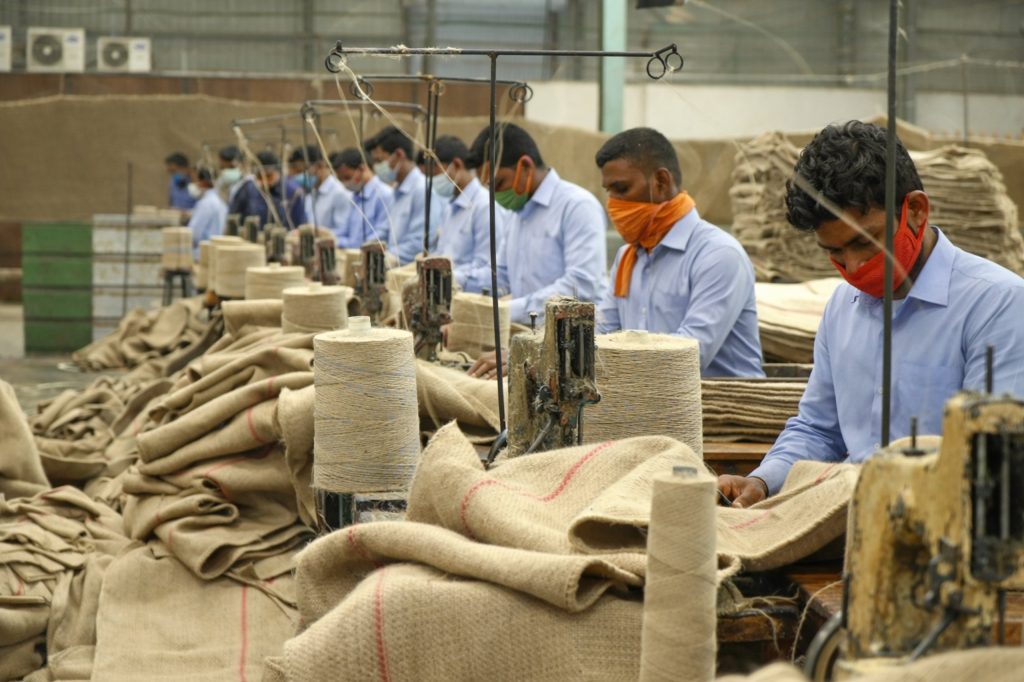
Report & Research
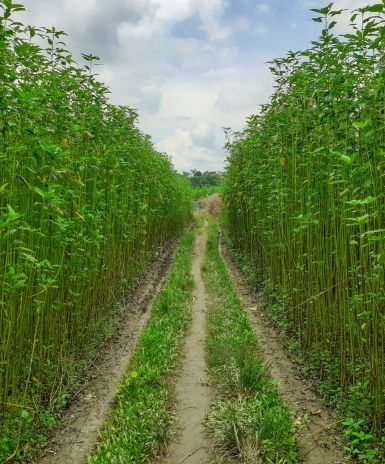
Mitigating Climate Change With Jute, A Natural Fiber.
An exploration of how jute shifts the sustainability
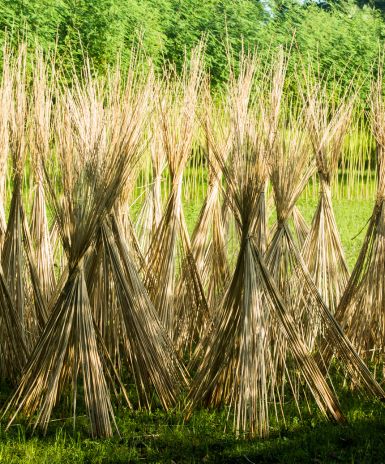
Net Ecosystem CO2 Exchange From Jute Crop & Its Drivers.
Maximising reducing plastic at source

Environmental Impact Assessment of Jute Bags - Tracing Impacts
A clear, practical guide for businesses
Frequently Asked Questions
Who is eligible to register a project under the FIBER Program?
Any jute farmer, cooperative, processing mill, or product manufacturer involved in one or more of our methodologies—TJF0001 (carbon sequestration), TJF0002 (plastic avoidance), or TJF0003 (bundled dual credit)—can register a project, provided it demonstrates additionality and meets baseline requirements.
What is a grouped project and can small farmers participate?
A grouped project enables multiple individual activities, like small farmers with separate land parcels, to be combined into one registered project under specific eligibility criteria. This approach helps small and marginal farmers who may find individual registration economically unviable. A cooperative, aggregator, or jute mill can act as the project proponent, managing registration, monitoring, and verification for the grouped farmers.
How long does it take to register a project and receive FIBER Credits?
The timeframe from listing to first credit issuance is about 12 months. We deploy a 15-day public comment period after listing on the TJF registry, followed by a robust process of Validation & On-boarding, Registration, Monitoring, Verification, and Issuance.
What documents are required to develop and register a FIBER Credits project?
Project proponents must create a Project Description Document (PDD) using TJF templates. It should cover the project’s objectives, geographic boundary, methodology, baseline scenario, additionality, monitoring plan, stakeholder engagement, and grievance mechanism. For grouped projects, include eligibility criteria for new activity instances. All templates are available on the Templates page after project registration.
What are the costs involved in developing a FIBER Credits project?
The Jute Foundation charges fees for Listing, Registration, VVB audits, and Credit issuance as detailed in the TJF Program Fee Schedule on the FIBER page. While the Foundation has automated much of the project development process to minimize costs for project proponents, it does not oversee external expenses, such as monitoring equipment, Consultant fees, and Legal costs incurred independently. Subsidized onboarding pathways are available for smallholder projects.
Can a manufacturer claim both carbon credits and plastic avoidance credits from the same batch of jute?
TJF0003 (Bundled Dual Credit methodology) enables manufacturers to claim a dual-environment benefit, including carbon and plastic, for manufactured jute bags, which have a lower carbon footprint than plastic, avoid upstream plastic generation, and support biodegradable waste management. Bundled credits are issued per fibre-batch ID, with safeguards to prevent double-counting and to support all 17 UN SDGs.